

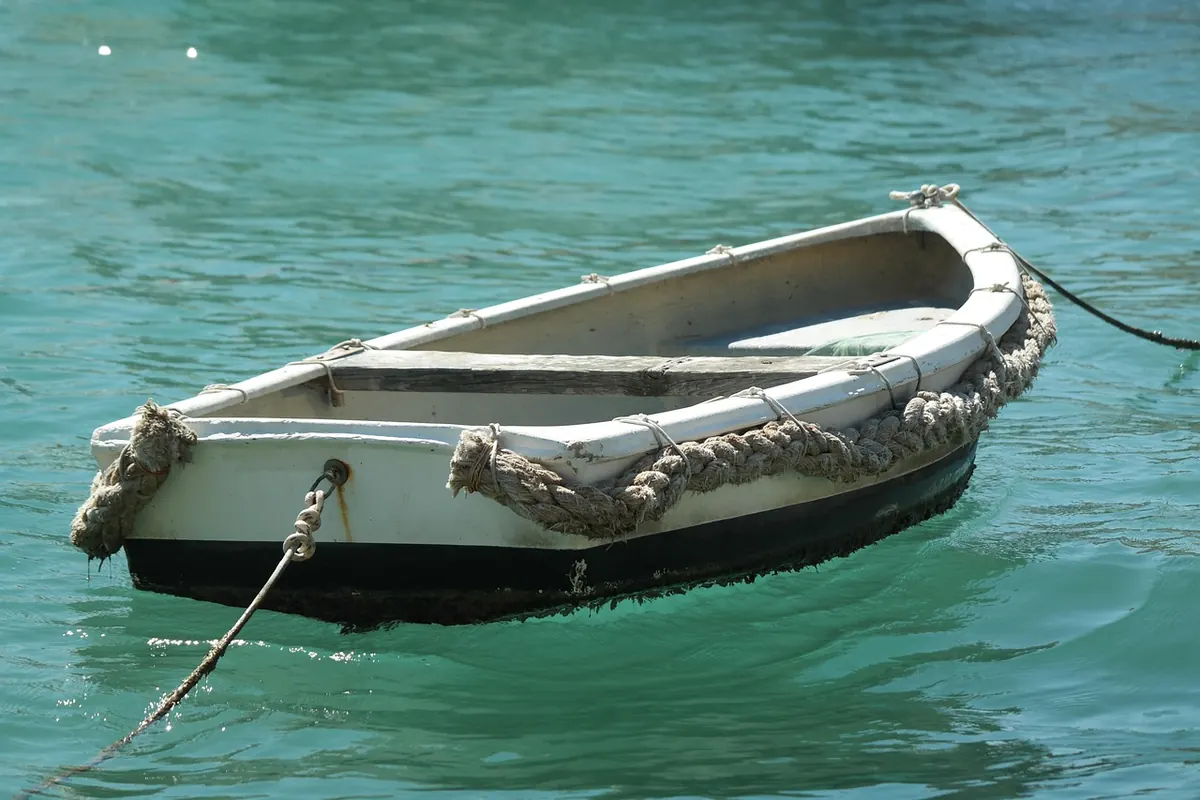
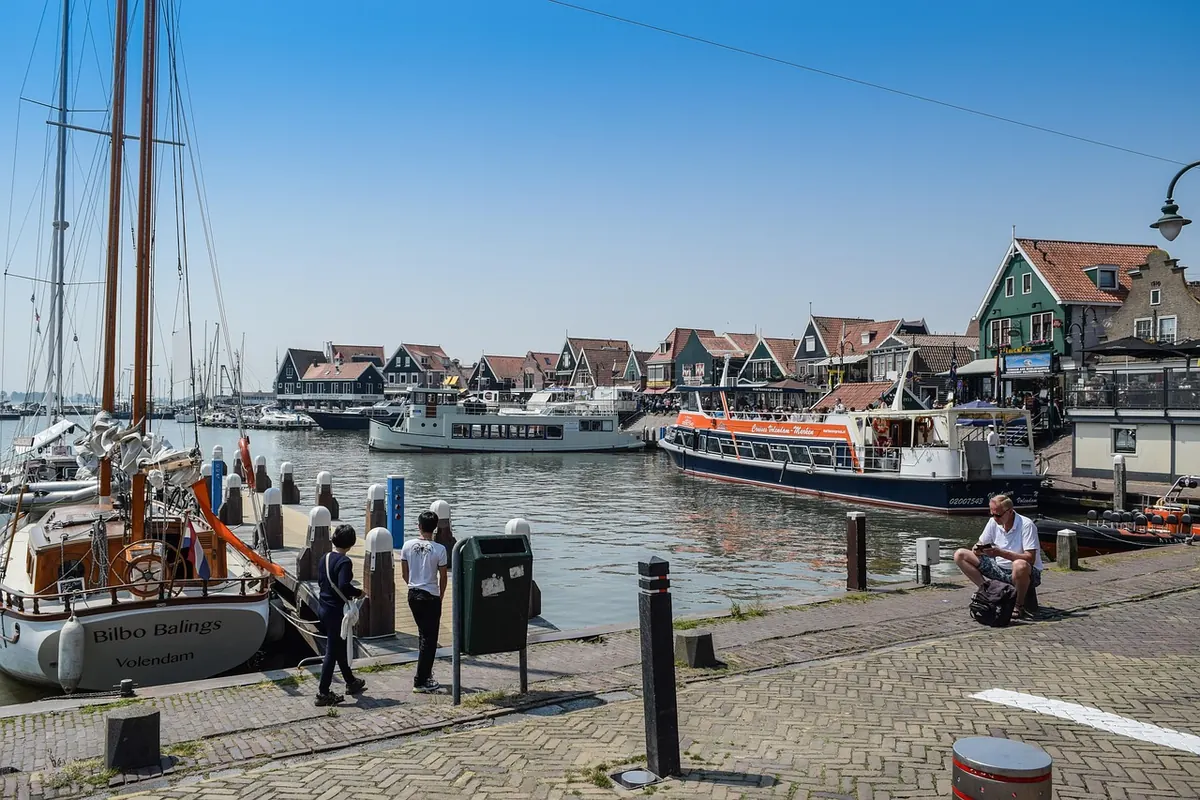

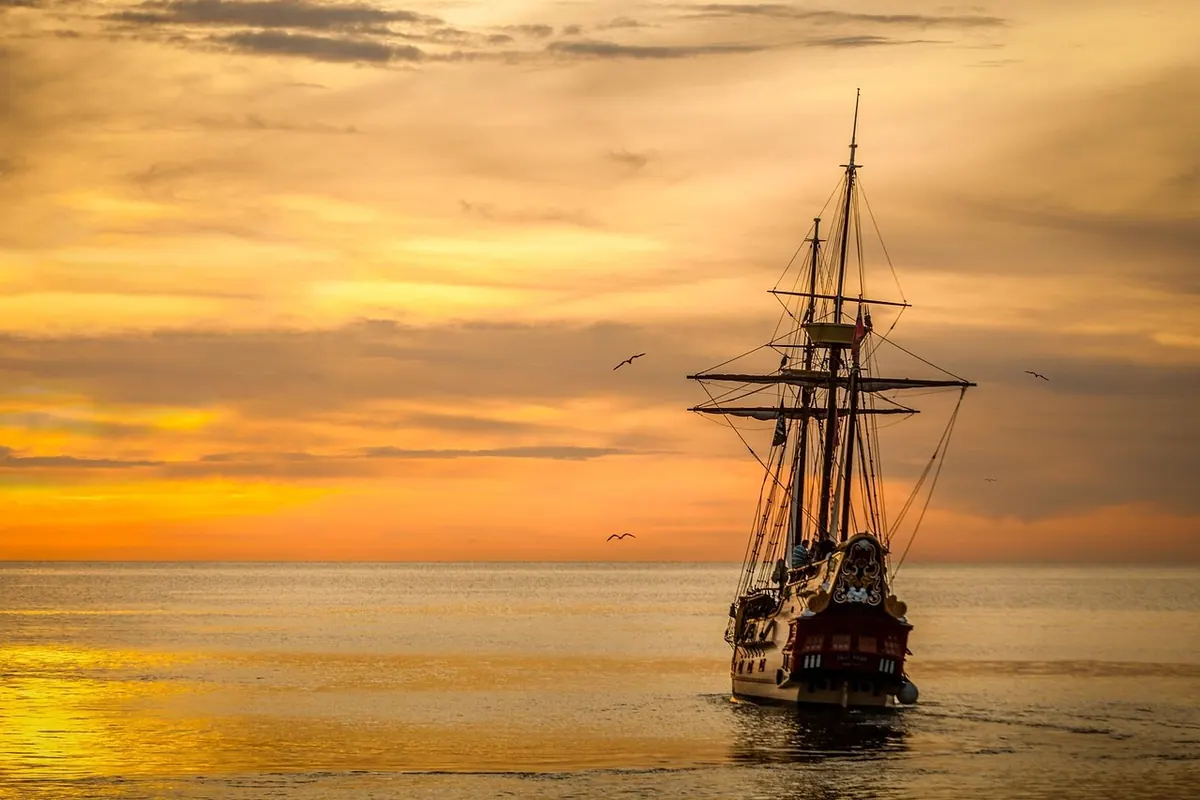
A harbor photograph is rarely just a picture of water and smoke. It is a stack of clues: the curve of a bow, the number of funnels, the angle of a mast, the way a crew clusters near a hatch. Learn to read those clues in order and an unidentified ship begins to speak.
The trick is not to look for a single giveaway. It is to build a case. Hull first, then rig, then propulsion, then deck detail. Each layer narrows the field, and the photograph itself supplies the final context.
Begin With the Hull, Not the Labels
The hull is the ship’s silhouette, and silhouettes are stubbornly honest. Start at the bow. A plumb stem drops straight into the water; a raked stem leans forward; a clipper bow curves outward and then inward with a bowsprit above it. Those shapes suggest different eras and different jobs, though no single profile is a date stamp.
Follow the sheer line—the curve of the deck edge from bow to stern. Sailing cargo vessels often show a pronounced rise at bow and stern, with a low waist amidships. Steam cargo ships tend to run flatter, with a higher forecastle and a compact poop. A long, low hull with a counter stern and a sharply raked bow may suggest a fast passenger or mail steamer; a beamy, slab-sided hull with a transom stern may suggest a workaday cargo carrier.
Look for paddle boxes. If the vessel is broad, with a boxy structure hanging over each side, you are looking at a paddle steamer. Tugs are usually short and broad, with a low hull and a wheelhouse pushed high and forward. Ferries tend to be wide and shallow, with side gangways and a vehicle deck. Hull proportions are not proof, but they tell you what family of vessel to examine next.
Read the Rigging as a Family Tree
Count the masts before you name anything. Then ask what each mast carries. Horizontal yards—the spars that hold square sails—are the strongest clue. A mast with yards is square-rigged; a mast with only fore-and-aft sails has gaffs, booms, or staysails. A bare mast can be misleading, especially in harbor, where sails are furled or removed.
A quick rig key
- Schooner: two or more masts, mainly fore-and-aft rigged, with the after mast often the taller one.
- Brig: two masts, square-rigged on both.
- Brigantine: square-rigged on the foremast, fore-and-aft rigged on the mainmast.
- Barque (often spelled bark): three or more masts, square-rigged on the fore and main, fore-and-aft rigged on the mizzen.
- Full-rigged ship: three or more masts, square-rigged on every mast.
This key is a starting point, not a courtroom verdict. Many vessels were re-rigged, and a photograph may catch a ship with only part of its sail plan set. Still, the combination of mast count, yard count, and sail type will usually place a vessel in the right family. From there, funnel and deck detail can separate a sailing trader from an auxiliary steamer, or a coastal schooner from a deepwater barque.
Funnels and Masts: The Steam Transition
Funnels are among the most useful visual clues because they mark propulsion and often company style. A single funnel on a vessel that still carries sails suggests an early steamer or an auxiliary. Two funnels suggest a larger or later steamship. Four funnels, where they appear, usually point to a fast passenger liner, though working vessels rarely carried so many.
Notice the funnel’s rake, height, and placement. A strongly raked funnel may sit on a fast passenger ship; a short, upright funnel may belong to a tug or a cargo steamer. Bands and badges can identify a shipping company, but in a black-and-white photograph the contrast may be faint. Look closely at the space between funnel and masts. A funnel set well forward, with a long stretch of working deck aft, often belongs to a cargo vessel. Funnels set close together amidships may suggest a passenger or packet service.
Masts change meaning in the steam age. A sailing ship’s masts carry yards, crosstrees, and standing rigging. A steamer’s masts may be reduced to cargo booms, signal masts, or derrick posts. If the “masts” are plain poles with blocks and wires for lifting cargo, you are probably looking at a motor or steam cargo ship, not a square-rigger.
Deck Layout and Working Gear
Deck detail tells you how the ship earned its keep. Sailing cargo vessels often have a low deck, large hatches, a capstan, and a helm at the stern. Steam cargo ships tend to show a midship bridge, deckhouses, ventilators, and several hatches. A tanker may show pipes, catwalks, and a small superstructure rather than a row of cargo hatches.
Look at the wheelhouse. A high, forward wheelhouse with clear side windows is common on tugs and ferries, where the master needs a view over the bow or alongside a tow. A passenger steamer may show promenade decks, lifeboats, skylights, and ventilator cowls. A trawler or fishing vessel often has a gallows, winches, and a fish hold close to the working deck.
Count the hatches and note their size. More hatches generally mean more cargo handling; a long clear deck with cranes or booms may mean heavy lifts or general cargo. Small deckhouses clustered aft can suggest a coaster or a harbor craft. None of these details names a ship alone, but together they create a profile that is hard to mistake.
Details That Date the Photograph and the Ship
Once the vessel type is clear, read the text in the image. A name on the bow or stern, a port of registry, draft marks, a house flag, or a company badge can turn a generic identification into a specific one. The national ensign and the house flag may narrow the owner and trade. If a name is visible, search port records and newspaper shipping columns rather than trusting the label on the back of the print.
Photo context matters too. The mount style, photographer’s stamp, dock architecture, vehicles, and clothing can suggest a date range. So can the ship’s equipment: the presence of a load line, radio aerial, or modern cargo gear helps place the image within a broad period. Be cautious with exact dates. A photograph may show an old ship late in its career, or a new ship in an old dock.
A Field Method for an Unidentified Print
- Scan the whole image first. Note the dock, water, people, and any visible text before you focus on the ship.
- Trace the hull. Record bow shape, stern shape, sheer, beam, freeboard, and any paddle boxes.
- Count masts and yards. Decide which masts are square-rigged and which are fore-and-aft rigged.
- Identify propulsion. Look for funnels, exhaust pipes, paddle wheels, or sail-only rig.
- Read the deck. Note hatches, deckhouses, bridge position, cargo gear, winches, and lifeboats.
- Collect names and marks. Check bow, stern, flags, draft marks, and photographer’s labels.
- Compare and record uncertainty. Match the profile against known types and port records, and write down a date range rather than a false certainty.
Practice on Known Photographs
Start with photographs of ships you can already identify. Cover the caption, make your own notes on hull, rig, funnels, and deck, then compare. You will quickly learn which clues carry weight and which are distractions. Keep a simple index card for each unknown print: mast count, funnel count, rig, hull profile, deck features, visible text, and confidence level. That habit turns a pile of old harbor photographs into a working reference collection—and makes the next identification much faster.
Photo: 851878 / Pixabay